Hybrid Work in 2026: What’s Changed Since the Pandemic-Era Experiments
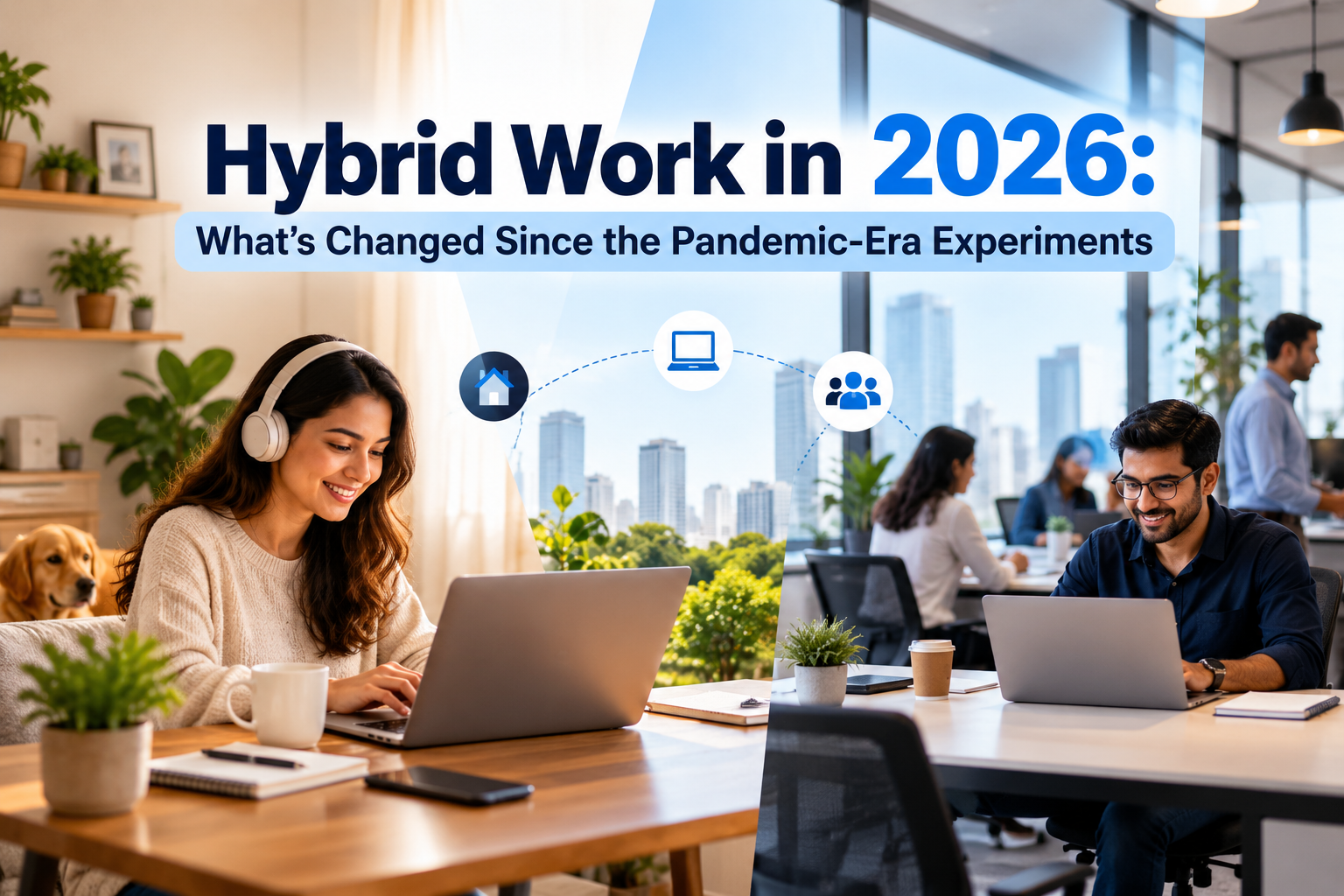
In 2020 and 2021, hybrid and remote work arrived almost overnight as an emergency response. Offices emptied, Zoom became the default meeting room, and companies scrambled to keep operations running. Five to six years later, the experiment is over. What remains is a more deliberate, structured form of hybrid work that looks different from both the pre-pandemic five-day office norm and the free-for-all flexibility of the early pandemic years.
The big picture in 2026 is clear: hybrid has become the dominant model for roles that can be done remotely, fully remote has stabilized at a lower level than its peak, and pure five-day office mandates have increased in some sectors—but overall work-from-home days remain far above 2019 levels.
From Chaos to Structure
Early pandemic hybrid was often unstructured. Employees chose their own days, collaboration suffered from constant context-switching, and managers struggled with visibility and culture. By 2026, most organizations that still offer flexibility have moved to intentional hybrid models.
Common patterns include:
- Fixed or core in-office days (often 2–3 days per week, frequently mid-week)
- Office time reserved for collaboration, brainstorming, onboarding, training, and relationship-building
- Remote days protected for focused individual work
- Clearer expectations around availability, response times, and outcomes rather than online presence
JLL data from 2026 shows the gap between target and actual office utilization narrowing, with a sharp rise in employees attending three to four days per week. Structured policies have become the norm: a majority of organizations now require a set number of in-office days rather than simply encouraging attendance.
The Numbers: Hybrid Holds, Fully Remote Softens
Among remote-capable U.S. workers (roughly half the workforce), recent Gallup and related surveys show roughly:
- ~50–52% hybrid
- ~26–28% fully remote
- ~21–22% fully on-site
Work-from-home still accounts for about 25% of all paid workdays in the U.S.—a figure that has remained remarkably stable since around 2023 despite waves of return-to-office announcements. Fully remote arrangements have declined modestly from their peak, while hybrid has stayed resilient.
Job postings tell a slightly different story. In parts of 2026, fully on-site listings rose sharply (some analyses showed 80%+ of new postings requiring full office presence), reflecting employers finalizing policies. Yet actual employee schedules have moved more slowly than the headlines. Many workers continue hybrid or remote arrangements even when companies formally push for more office time.
Variation by sector and location is large. Tech and information roles retain higher remote/hybrid rates in many places, while government, healthcare, and certain administrative functions have seen steeper returns to on-site work. Geography also matters: coastal and high-cost cities often sustain more flexibility than other regions.
What Has Actually Improved
Several practical lessons from the early experiments have stuck:
Outcome-based management has largely replaced “hours online” as the primary productivity signal. Managers who once tracked green dots now focus more on deliverables, project progress, and results.
Asynchronous communication is more mature. Teams rely less on constant meetings and more on written updates, recorded video, shared documents, and project tools. Meeting volume remains a pain point, but the worst excesses of 2020–2021 have been reduced in better-run organizations.
Office design and purpose have shifted. Many companies no longer aim for one desk per employee. Peak utilization has risen, desk-sharing ratios have increased, and space is being reconfigured for collaboration rather than individual heads-down work.
Technology and AI play a larger supporting role. Better video tools, collaboration platforms, and emerging AI agents help with scheduling, knowledge sharing, meeting summaries, and routine coordination—reducing some of the friction that made early hybrid feel exhausting.
Persistent Challenges
Not everything has been solved. Culture and connection remain harder in distributed teams. Spontaneous hallway conversations and informal mentoring are still weaker. Some employees report isolation; others feel pressure when in-office days become more mandatory without corresponding improvements in the office experience.
Return-to-office mandates continue to generate friction. Surveys show many employees still prefer hybrid or remote options and will consider leaving if flexibility is removed entirely. At the same time, some leaders believe physical presence drives innovation, mentorship, and alignment especially for junior staff and complex cross-functional work.
Trust gaps persist. A portion of managers still equate presence with productivity, while many employees feel their output is higher or equal when they control their environment.
What Works in 2026
Organizations getting the best results tend to:
- Define clear reasons for office days instead of arbitrary mandates
- Protect focus time on remote days
- Invest in both physical space and digital collaboration tools
- Measure outcomes rather than attendance alone
- Treat flexibility as a talent strategy, especially in competitive labor markets
- Support managers with training on leading hybrid teams
Employees who thrive often treat the office as a destination for specific high-value activities rather than a default location, and they become intentional about building relationships across locations.
Looking Ahead
Hybrid work in 2026 is no longer an experiment. It is a maturing operating model that balances flexibility with structure. The extreme ends five days fully remote for every role or five days mandatory office for every role—have both proven limited. The middle ground, when designed thoughtfully, continues to deliver productivity, retention, and employee preference advantages for many knowledge-work organizations.
The companies that succeed are those that stopped treating hybrid as a temporary compromise and started treating it as a deliberate system: clear expectations, purposeful office time, strong digital infrastructure, and management practices built for distributed reality. The pandemic proved flexibility was possible. 2026 is proving that structure is what makes it sustainable.
Related Posts

The Hidden Cost of Manual Processes (and How to Calculate Your Automation ROI)
Manual processes hide major costs beyond labor—errors, rework, delays, lost opportunities, and turnover often...

Data Privacy and AI: What Customers Expect from Businesses in 2026
In 2026, customers accept AI but demand transparency, control, and limits on data use. Many will switch brands...
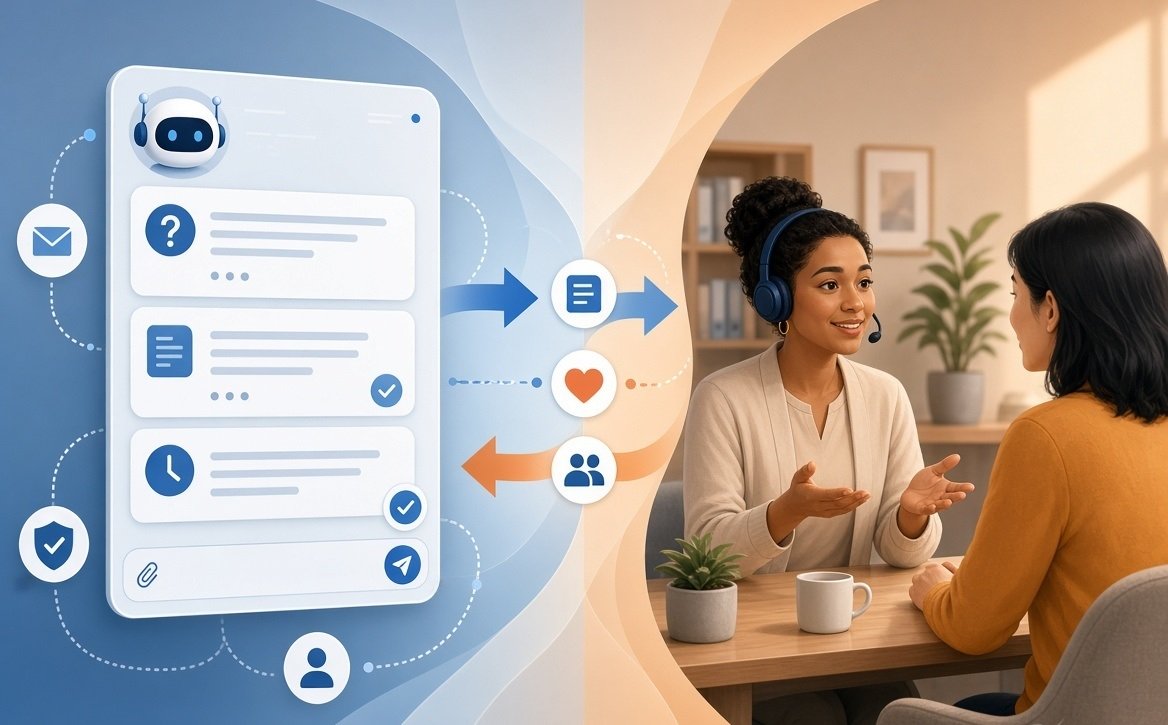
Automating Customer Service Without Losing the Human Touch
Automate routine customer service (order status, FAQs, simple returns) with AI for speed and 24/7 coverage, bu...
Comments (0)
Log in to join the discussion.
No comments yet. Be the first to share your thoughts!